

By Teresa Hoffman, former staff member
They’ve been chronicling the people, places, and events of small towns for decades—some even 100 years or more. However, as social media, the internet, and other sources of information have come on the scene, community newspapers have had to fight for readers’ and advertisers’ attention.
Now, in the midst of the coronavirus pandemic, owners are once again facing tough decisions as they deal with declining revenue. While some newspapers across the country have closed, two Nebraska publishers are forging ahead.
A town’s not a 'community' without a newspaper
The pressure of his family’s 151-year history in the newspaper business is not what pushes publisher Mark Rhoades forward in challenging times.
“I think it’s more my own drive to keep our newspaper and associated businesses alive because I believe a newspaper is so essential to the health of any community,” Mark said, “I buy into the philosophy that your town is not really a ‘community’ without a newspaper.”
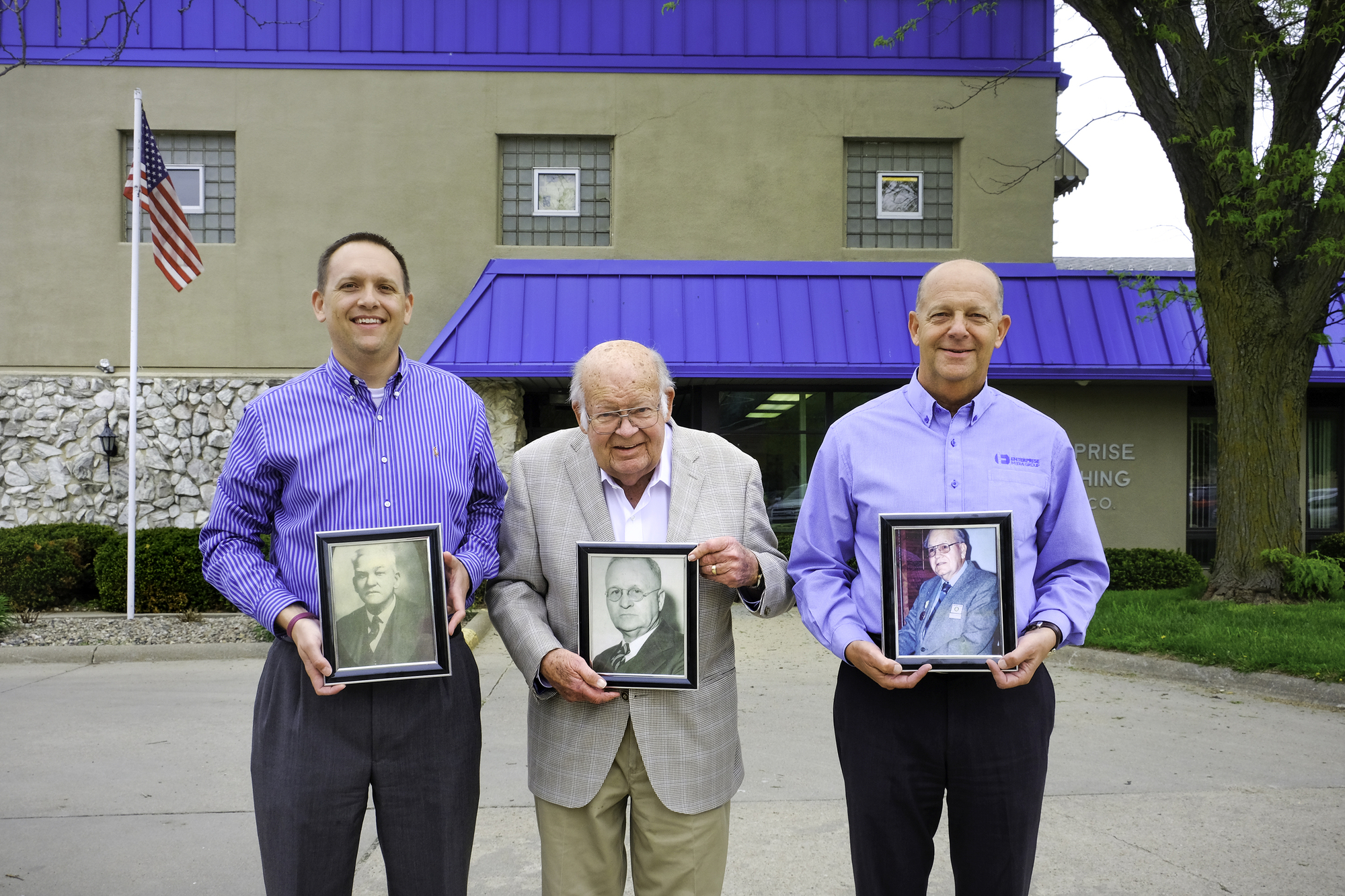
The Rhoades family’s commitment to community newspapers began on May 20, 1869.
Mark, the fifth generation to operate a newspaper in Blair, Nebraska, purchased the company, now known as Enterprise Media Group, from his father, Ken, in 1995. Mark’s son, Chris, serves as associate publisher, becoming the sixth generation to join the business.
The Enterprise also publishes newspapers in Arlington, Lyons, Oakland, Seward, Milford, Friend, Wilber, and Crete, Nebraska, and Missouri Valley, Dunlap, and Mapleton, Iowa.
Mark’s lifelong career in the industry began at age 10 with odd jobs, such as cleaning the press, then taking photos and sports writing in high school. Over the years, he has experienced his share of challenging times, such as a hail storm in 2014 that caused significant damage to the Enterprise’s office, and the 2008 economic recession.
But, nothing compares to a global pandemic.
“This is the toughest ever,” Mark said.
With businesses closed and many summer events canceled, advertising needs changed and revenue sources were gone. Already under pressure before the pandemic, Mark said the Enterprise was forced to institute some cost-cutting measures before they originally anticipated, including outsourcing printing of their newspapers, which led to some job cuts, and publishing their Missouri Valley newspaper once a week, instead of twice.
“We had discussed that for probably two years,” Mark said of the change in Missouri Valley. “As soon as this (the coronavirus) hit, we said we have to do it.”
Those decisions and assistance from the Paycheck Protection Program have allowed the Enterprise to avoid further job cuts and furloughs.
While June revenue was the slowest month on record in at least 10 years, Mark said July was better and August is promising, but it’s too early to tell.
Even with the challenges they face, the Enterprise staff’s commitment to covering the news and events of the communities they serve remains strong. In fact, it’s been one of the bright spots.
“Newspaper sales and readership are as high as I’ve seen in years,” Mark said. “That proves to me that people are needing local news and I think that we do a good job with that.”
Publisher overcomes challenges one week at a time
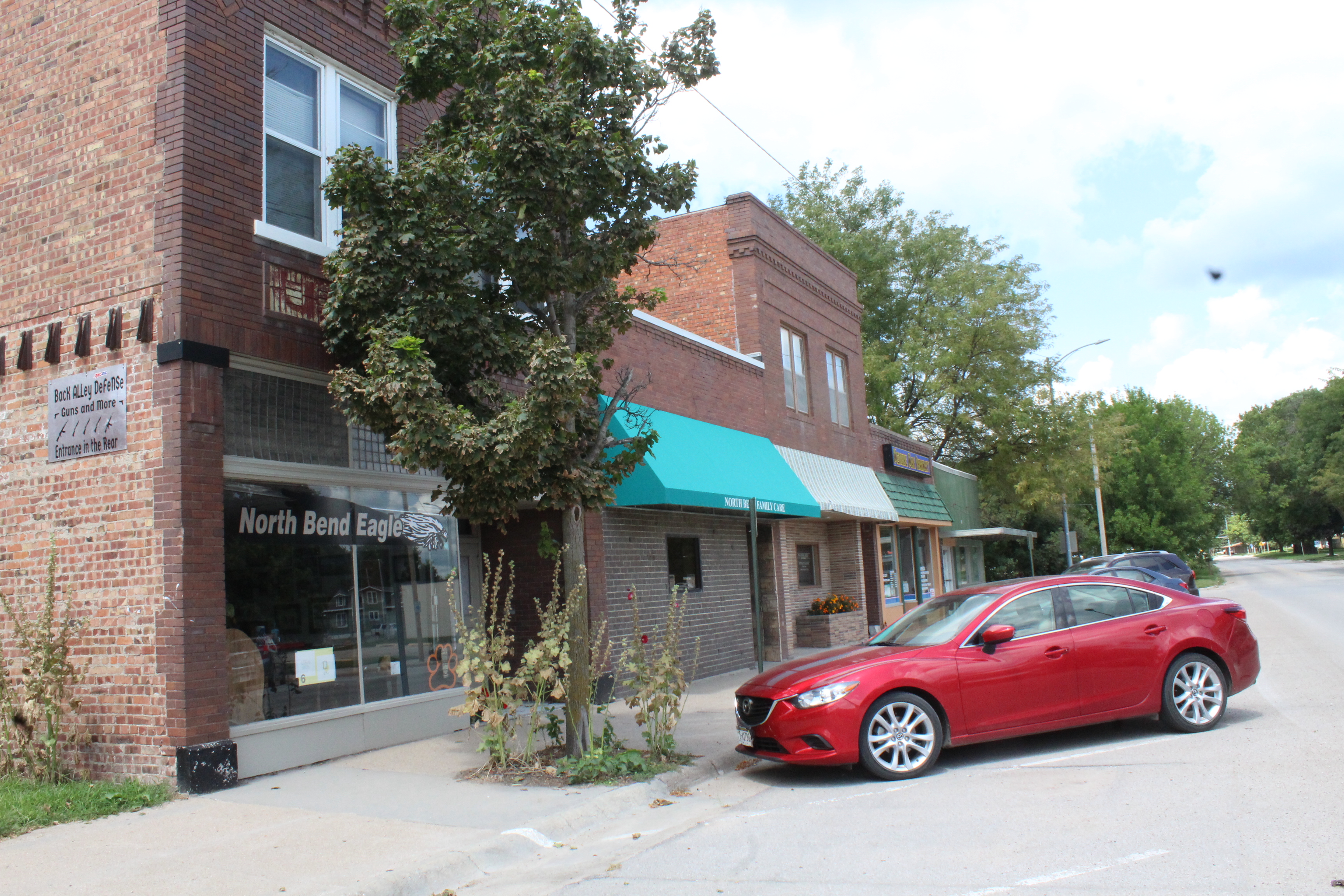
When Nathan Arneal bought the North Bend Eagle in 2006, he expected his news coverage would include the occasional fire or natural disaster, such as flooding.
But, he didn’t anticipate being in the middle of the action as a journalist, business owner, and victim.
Nearly four years after becoming publisher of his hometown paper, the office of the North Bend Eagle was among several downtown businesses destroyed during a fire.
The moment was surreal.
“Here’s the biggest news event that has happened in years and I’m right in the middle of it, literally and figuratively because my business is burning down,” he said.
Among the items lost in the fire were years of bound issues of past newspapers.
However, Nathan didn’t have much time to think about the loss. It was Monday, the day he put the newspaper together and delivered it for printing.
After taking photos and conducting interviews, he retreated to his temporary office at his parent’s house north of town. The newspaper, complete with a firsthand account from Nathan of photos of the fire, was delivered to the printer, readers, and newsstands on time.
Though he was dealing with insurance companies and other issues that arose from the fire, keeping the newspaper on track was important.
“This isn’t just a business, this is a newspaper that has existed since 1897,” he said. “Newspapers walk that curious line of between being a privately-owned business and a public entity. Leaving North Bend without a newspaper never even crossed our mind.”
Ten years later—spring 2019—Nathan found himself back working at his parent’s house after flood waters converged on North Bend, causing damage in the building he purchased after the fire.
With a little more advance notice, Nathan was able to move equipment and other items to higher ground before flood waters came. As the days passed, Nathan’s reporting efforts expanded beyond putting out a newspaper. Taking to the Eagle’s Facebook page, he gave numerous live reports.
This time around, the structure of his office remained intact. A loan through the Small Business Administration helped with the cost of repairs.
Nearly a year later, Nathan once again faces adversity. Despite his previous experience, the coronavirus pandemic is entirely new territory. So, he handles it the only way he knows how—taking it one week at a time.
At first, he was worried what the cancellation of the spring high school sports season would mean for readership and subscriptions.
“Sports are such a driver of a small town newspaper,” he said. “People want to see their kids’ and grandkids’ pictures in the paper and read about them.”
But, Nathan said the community has been supportive. He also received assistance from the Paycheck Protection Program to help with staff salaries.
Despite some decline in advertising revenue, Nathan said the Eagle is doing better than other newspapers. As past president of the Nebraska Press Association's OnePress board, he’s reached out to other publishers to talk about concerns and challenges they are facing. He’s also seen national reports of struggling newspapers.
“It breaks my heart to see others closing,” he said. “A rising tide lifts all boats and the more and more society gets out of the habit of reading a newspaper, that’s bad for all of us.”
However, in the face of adversity and changing times, Nathan has one philosophy he lives by.
“If you continue to put out a product that people want to read, you will be fine,” he said.
Feature photos:
Six generations: Chris, left, Ken and Mark Rhoades hold photos of L.F. Hilton, John A. Rhoades and J. Hilton Rhoades, respectively, outside of the Enterprise Media Group office in Blair. L.F. Hilton, Chris' great-great-great-grandfather, started the first newspaper—The Register—in Blair in May 1869. | Photo courtesy of Enterprise Media Group.
Nathan Arneal, editor/publisher of the North Bend Eagle, carries out one of the bound books of newspapers damaged during a 2006 fire that destroyed the newspaper offices and other buildings in the downtown area. | Photo courtesy of the North Bend Eagle.